14-16 Dec 2026 · Kobe, Japan


Keynote I: AIoT-Based Smart Hospital
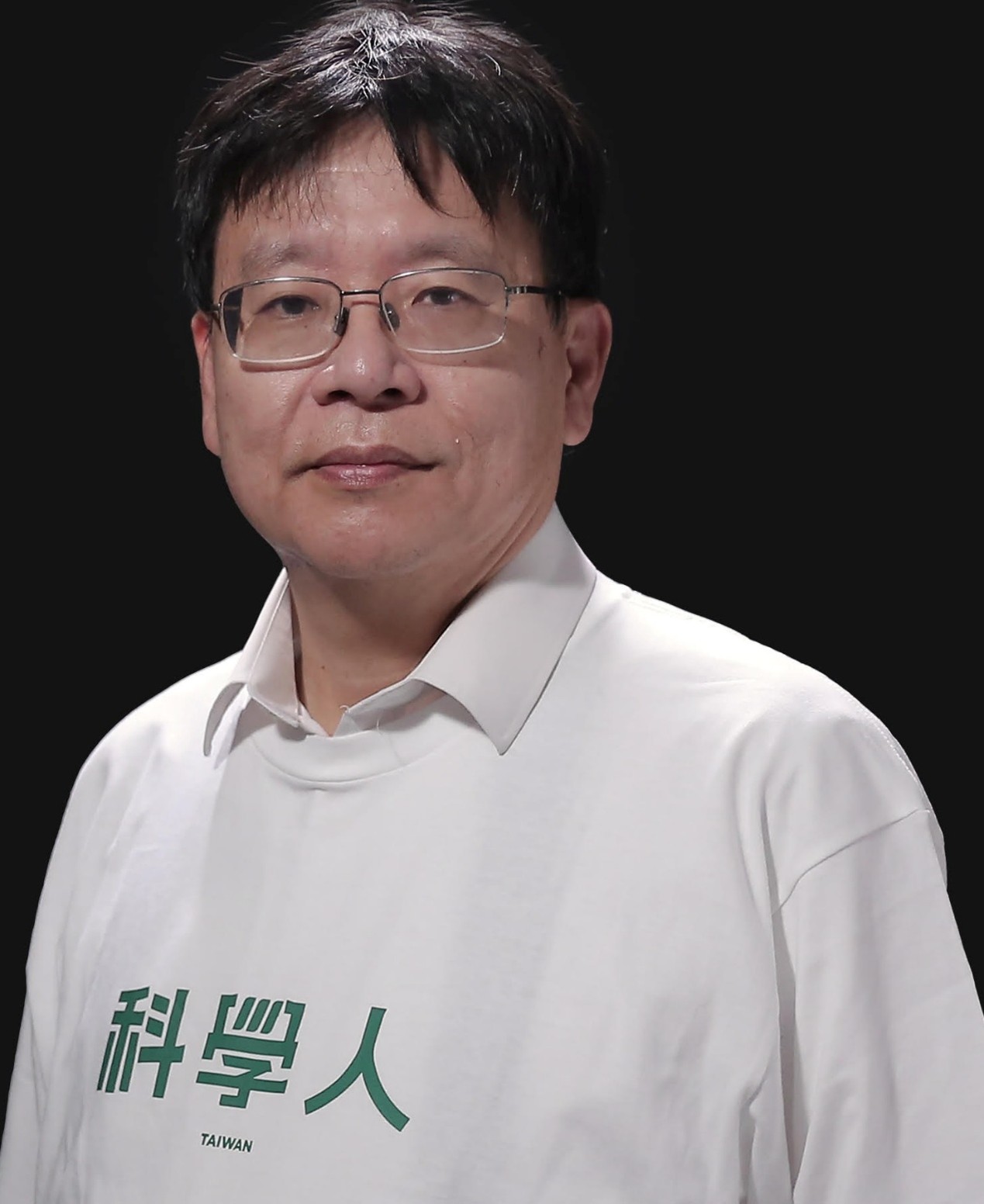
Prof. Yi-Bing Lin
Chair Professor, China Medical University, Taiwan; Advisor, Quanta and NYCU/NCKU Joint AI Research Center, Taiwan
Abstract
A smart hospital should not merely collect data but should intelligently process and utilize the data it generates to improve healthcare services, operational efficiency, and patient outcomes. This talk presents an Artificial Intelligence of Things (AIoT)-based architecture for smart hospitals, emphasizing modularity, scalability, and the integration of artificial intelligence with medical devices and hospital information systems.
We first distinguish three essential information platforms: Hospital Information Systems (HIS), smart healthcare, and smart hospital buildings. Because these platforms have different performance and communication requirements, they should be developed using loosely coupled, independently deployable microservices rather than tightly integrated monolithic systems. The Quanta QOCA and IoTtalk platforms provides a foundation for this approach, supporting no-code, low-code, and full-code application development.
Practical implementations at China Medical University Hospital are introduced, including a smart Respiratory Intensive Care Unit (RICU), IoT-enabled robotic gait rehabilitation, and smart clothing for patient monitoring. These applications demonstrate how AIoT technologies can connect medical devices, integrate heterogeneous data, and support intelligent healthcare services.
The talk further introduces the proposed China Medical University AI Foundry, a layered architecture integrating GPU computing infrastructure, standardized medical data, foundation models such as CMU-MedGPT and CMU-MultiModal, specialized medical AI models, AI agents, and healthcare applications. Cybersecurity, governance, and auditing are incorporated across all layers.
The conclusion is that the future smart hospital should evolve from isolated information systems into a scalable, AIoT-driven ecosystem in which medical professionals can develop and deploy intelligent applications with minimal programming effort, while maintaining clinical relevance, interoperability, and effective governance.
Keywords: Smart Hospital, AIoT, IoTtalk, Microservices, Medical AI, AI Foundry, Healthcare Robotics, AI Agents.
Biography
Jason Yi-Bing Lin is a leading international scholar in information and communications technology (ICT), spanning a distinguished career across academia, government, and industry. Over three decades, he has made foundational contributions to mobile communications, the Internet of Things (IoT), and artificial intelligence (AI), shaping network architectures, telecommunications services, and emerging intelligent applications globally.
After receiving his Ph.D. in Computer Science from the University of Washington in 1990, Professor Lin worked as a Research Scientist at Bell Communications Research (Telcordia) until 1995. He then joined National Chiao Tung University (NCTU). After 2025, he joined China Medical University (Taichung, Taiwan) as Chair Professor.
His research bridges theoretical advances with practical relevance, encompassing mobile computing, smart city IoT, and software-defined networking. He has authored three widely adopted textbooks on mobile telecommunications used across more than sixty global universities. His prolific scholarship includes nearly 500 journal papers, over 200 conference papers, and over sixty patents across Taiwan, the US, China, the UK, and the EU.
As a recipient of Fellow honors from the IEEE, ACM, AAAS, and IET, his numerous accolades include the TWAS Prize in Engineering Sciences (2011), the K. T. Li Honorary Scholar Award (2023), and the National Professorship Award (2011). He was also recognized internationally for innovations like AgriTalk Farming Sensors, earning a CES Innovation Award and a WITSA Global ICT Excellence Award. Professor Lin’s multifaceted career continues to leave a profound, lasting impact on the international ICT community.
Workshops
News
-
May 4, 2026
Web site is up.
-
May 4, 2026
Call for Papers published.
Important Days
-
August 1, 2026Paper Submission Due -
August 24, 2026Paper Submission Due -
September 10, 2026 (FIRM)
Paper Submission Due
-
October 16, 2026
Notification of Acceptance
-
November 13, 2026
Final Manuscript (Camera Ready)
Copyright © IEEE International Conference on Artificial Intelligence of Things (IEEE AIoT)